Setting Rider Sag
Rider sag, also known as race sag, is very important and quite often overlooked. Most of the time the first thing your suspension technician will ask is if you “set your sag?” Incorrect sag measurements can make or break a first impression of a new bike or setting. Today’s bikes are so refined and sensitive to front and rear balance that improper sag can dramatically alter the way a bike handles.
Sag can also be used as a tool to figure out if the rider is on the correct shock spring rate.
Definitions to Know and Understand
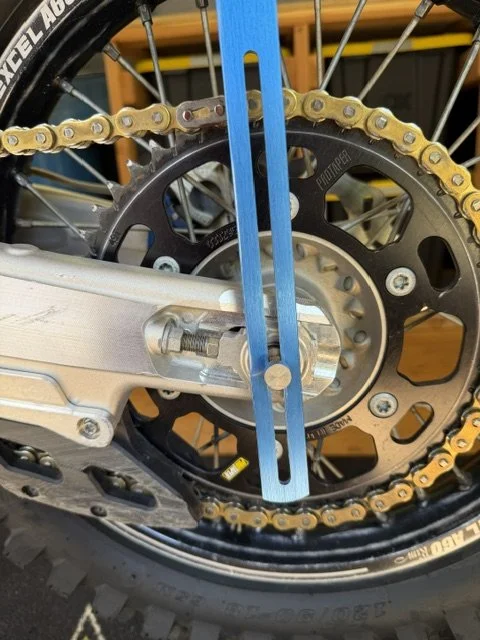
Extended Length - is the measurement from a fixed point on the swingarm to a fixed point in the rear fender while the bike is on a center stand. The most common points on the swingarm are the center of the axle or the edge of the axle block dropout. The fixed point on the rear fender can be anywhere directly above the rear axle. Some manufacturers provide a point molded into the fender.
Rider/Race Sag - is performing the same extended length measurement, but with the bike on level ground and the rider on the bike.
Tools Required
Metric tape measure/Sag scale tool
Bike center stand
3rd person
Setting Sag with Metric Tape Measure
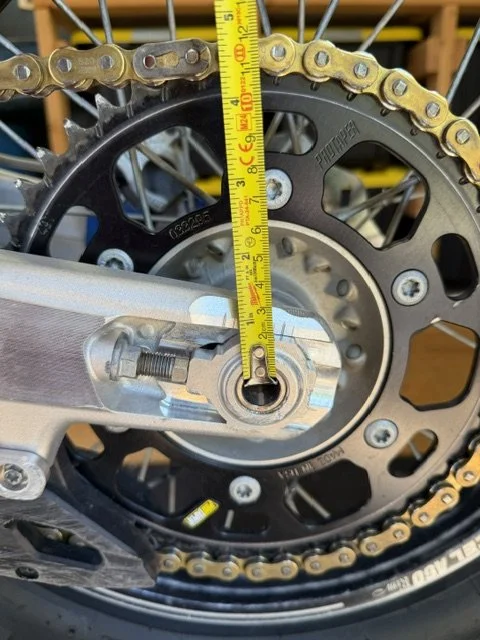
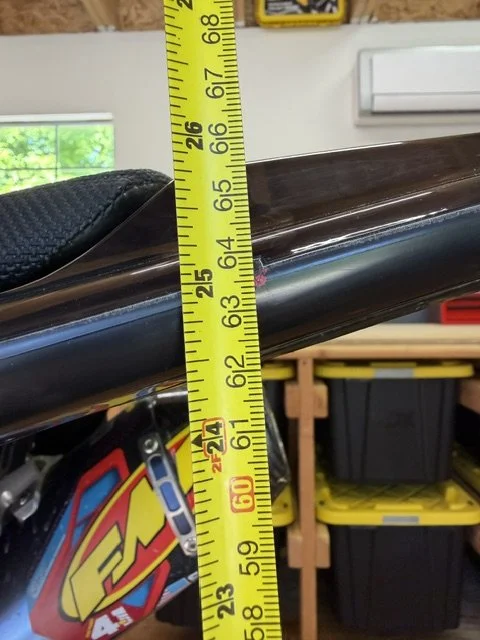
Check and record extended length with the bike on the center stand. The most common points on the swingarm are the axle hole or the edge of the axle block dropout. The fixed point on the rear fender can be anywhere directly above the rear axle. Some manufacturers provide a point molded into the fender.
With the rider in riding gear and the bike on level ground, have the rider stand on the foot pegs with their hands at their sides. This will require the 3rd person to hold the rider up from the front of the bike. Holding the bike from the side or rear will disrupt the measurement. Record the measurement with the rider on the bike at the fixed point on the fender.
Subtract the measurement with the rider on the bike from the extended length measurement. The result is your rider/race sag measurement.
Setting Sag with Sag Scale Tool
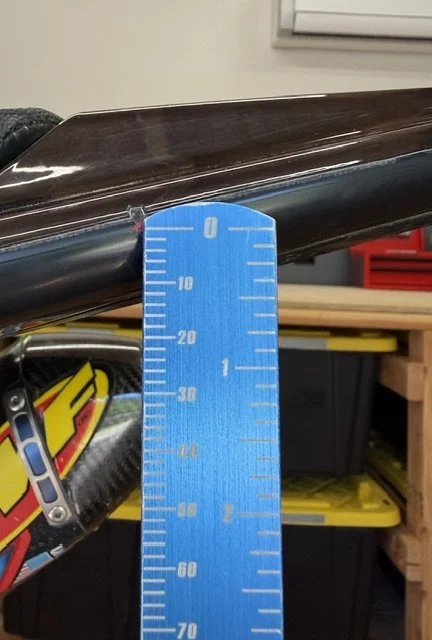
Set the extended length zero point with the bike on the center stand by inserting the axle end of the tool into the axle. Find “zero” at the fixed point on the rear fender and lock the tool. The fixed point on the rear fender can be anywhere directly above the rear axle. Some manufacturers provide a point molded into the fender.
With the rider in riding gear and the bike on level ground, have the rider stand on the foot pegs with their hands at their sides. This will require the 3rd person to hold the rider up from the front of the bike. Holding the bike from the side or rear will disrupt the measurement. The fixed point on the rear fender will line up with the rider/race sag measurement that is printed on the sag scale tool.